
By Sizwe Ndebele | Mzansi Student Media (MSM)
November 2026
The Cost of a Phantom Month
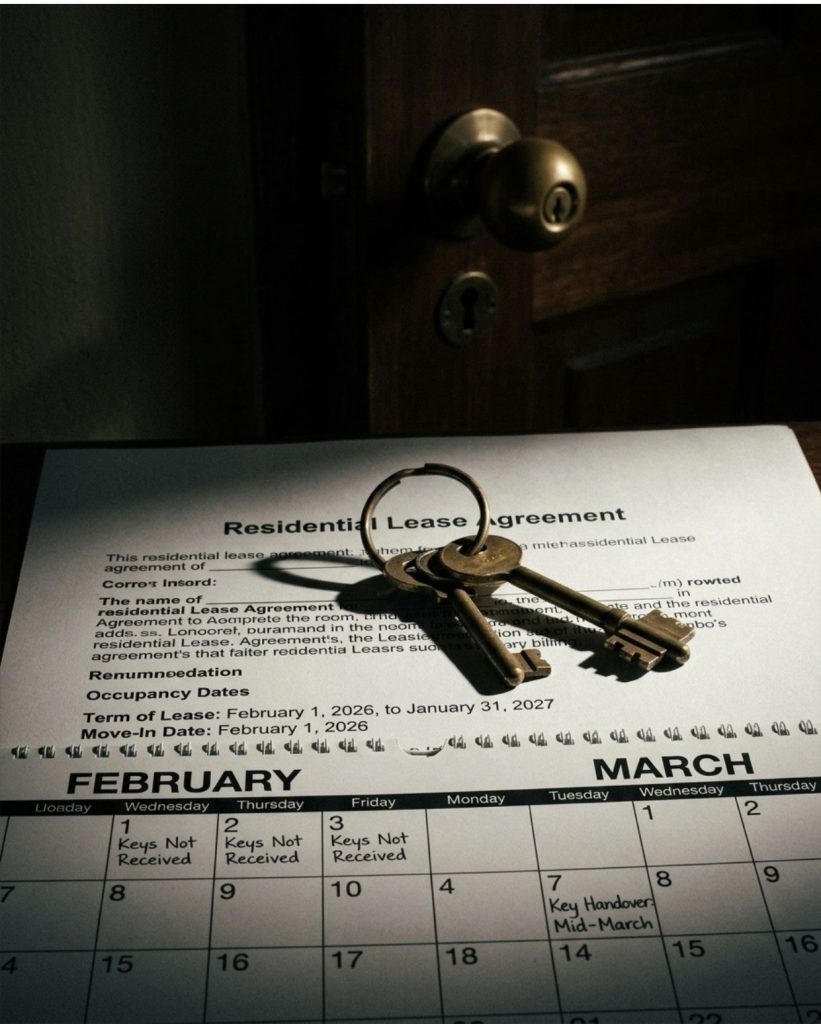
On 10 March 2026 at 18:38 PM, I stood outside my assigned off-campus residential unit, finally receiving the physical keys required to unlock my room for the academic year. The semester was already well underway, yet physical access had been impossible until that moment.
However, when the formal lease agreement arrived from property management, the financial ledger told a starkly different story. The contract executed by the landlord enforced retroactive financial liability commencing on 5 February 2026—more than a month before physical entry was granted.
This personal dispute sparked a broader investigation by Mzansi Student Media (MSM) into off-campus student housing compliance. Financial ledgers and bank records confirm that a lump-sum Fundi accommodation allowance of R3,060.00 (covering two monthly installments of R1,530/R1,531 for February and March 2026) was disbursed on 28 March 2026. Because the lease was backdated to 5 February, the provider captured the full February allocation—billing for 33 days of “phantom occupancy” during which physical access was denied, enforced under threat of lease cancellation and administrative blacklisting.

Across South African university towns, severe higher education accommodation shortages have fostered a seller’s market. Private accommodation providers operating under minimal post-accreditation oversight increasingly leverage desperate student demand to enforce coercive contract terms, capturing public bursary disbursements—including National Student Financial Aid Scheme (NSFAS) allocations—for services never rendered.
The Paper Trail
The mechanics of the backdating scheme rely on exploiting the gap between contractual execution dates and actual physical possession. Grounded in verified primary documentary exhibits, MSM’s investigation reveals a structured pattern of administrative non-compliance.
| Timeline Milestone | Recorded Date & Time | Evidentiary Status |
|---|---|---|
| Contractual Liability Begins | 5 February 2026 | Backdated lease commencement clause |
| Unclaimed Possession Window | 5 February – 10 March 2026 | 33 days of withheld physical entry; February allowance collected |
| Actual Key Handover | 10 March 2026 at 18:38 PM | Verified via timestamped electronic chat records |
| Double-Month Allowance Disbursed | 28 March 2026 | R3,060.00 Fundi allowance released (covering Feb & Mar rent at ~R1,531/month). |
Timestamped communication logs confirm that property management maintained control of access keys throughout February and early March. Despite holding physical possession, management maintained that signing the backdated lease was a non-negotiable condition for key release.
The documentary evidence extends beyond informal chat transcripts. Affected students have formalized similar experiences through sworn South African Police Service (SAPS) affidavits, detailing instances where property managers refused key release until agreements asserting February liability were executed. Security gate sign-in ledgers and physical access logs further corroborate that student credentials were not registered on property access systems prior to mid-March, rendering entry physically impossible during the period for which full rent was demanded.
EXHIBIT A: Backdated Lease Clause (05 February 2026)
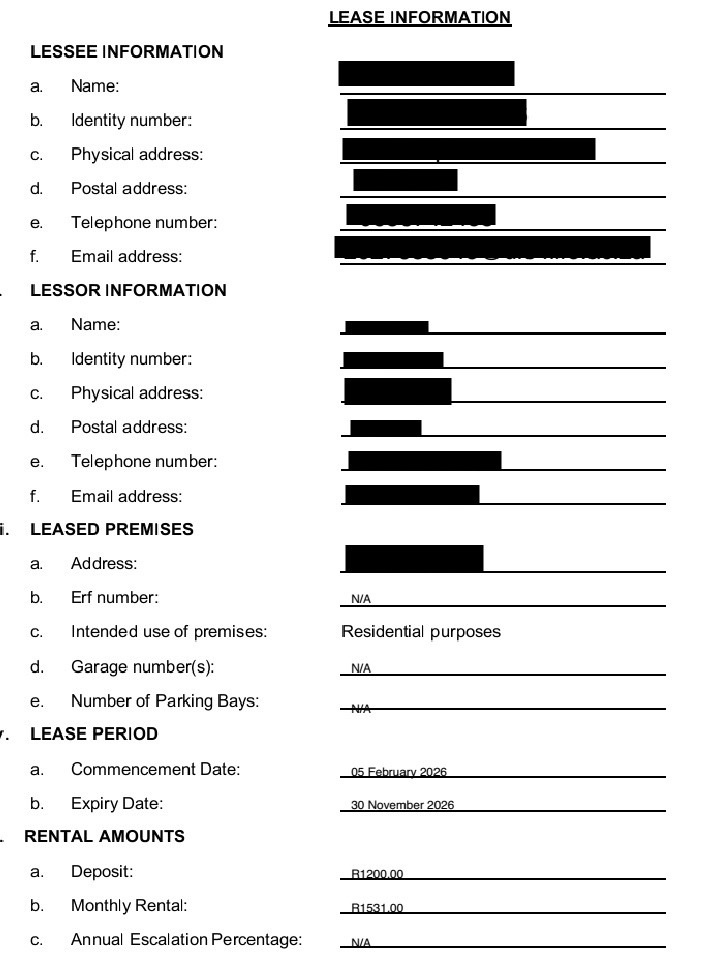
Lease agreement clause enforcing financial liability from 5 February 2026 (Personal details redacted).
EXHIBIT B: Bank Statement – R3,060.00 Fundi Disbursement (28 March 2026)

Redacted statement confirming R3,060.00 Fundi allowance released for February & March 2026.
EXHIBIT C: Key Handover WhatsApp Log (10 March 2026 at 18:38 PM)
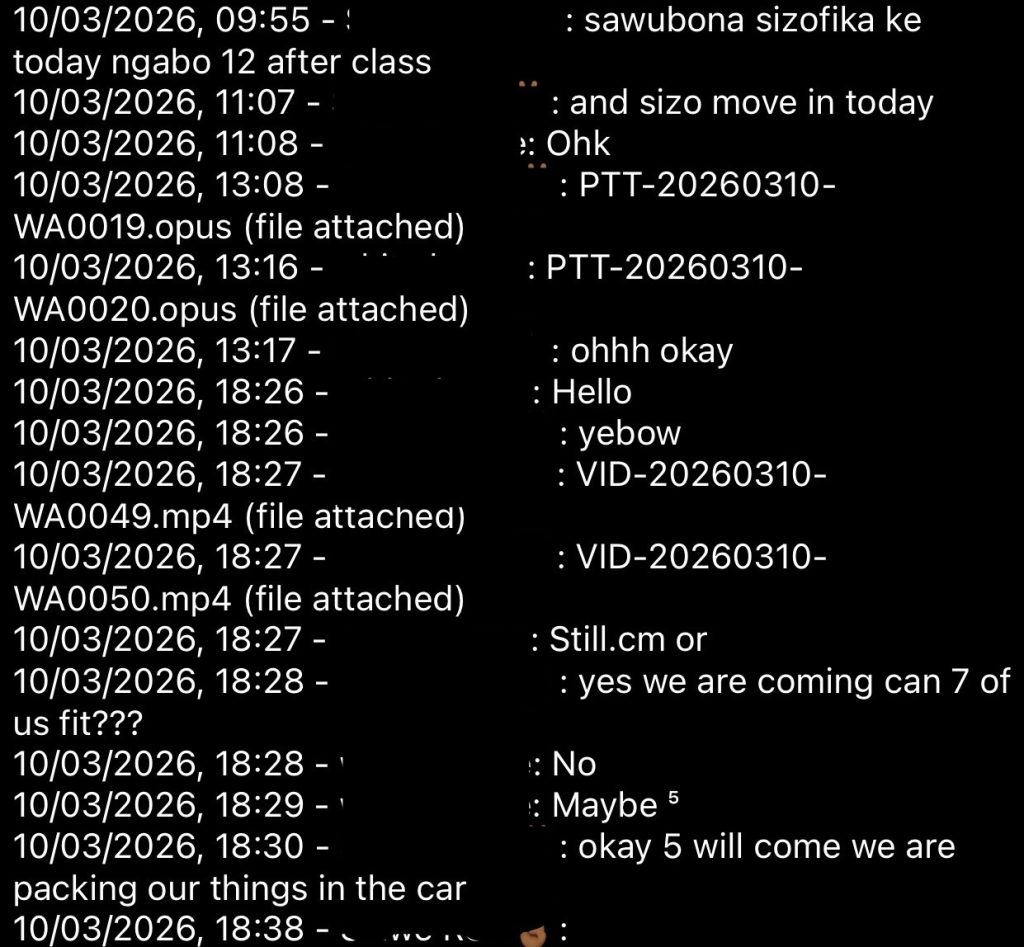
Timestamped electronic message confirming physical key collection on 10 March 2026.
Institutional & Financial Policy Breaches
This billing mechanism directly contravenes university financial aid guidelines governing off-campus accommodation disbursements.
Under official 2026 private accommodation allowance protocols—such as those enforced at the University of the Free State (UFS), where private accommodation caps reach up to R49,282.00 per annum—disbursements are strictly calculated based on actual move-in and move-out dates recorded on an authentic lease agreement.
Institutional policy explicitly prohibits students from applying for private accommodation with backdated lease agreements, warning that submitting backdated contracts subjects both the student and the landlord to formal investigation. By coercing students into signing contracts backdated to early February while withholding keys until mid-March, private providers place vulnerable tenants in technical non-compliance while extracting unearned bursary funds.
While off-campus providers rely on university accreditation listings to attract student tenants and qualify for direct bursary payments, oversight frameworks focus largely on pre-intake physical infrastructure—such as room dimensions, security fencing, and fire safety—while failing to audit post-accreditation leasing practices and actual move-in timelines.
Right of Reply & Institutional Responses
In strict compliance with Section 1.8 of the South African Press Code, formal written inquiries detailing these specific findings were dispatched via verified electronic messaging channels to afford all relevant parties a reasonable opportunity to respond prior to publication.
SRC Housing Department Response
When initially approached for comment regarding off-campus housing disputes, an SRC Housing Department representative noted that certain internal processes were still underway. However, following further clarification on the mechanics of lease backdating, the representative confirmed on the record that “there are complaints coming from the offcampus students” and verified that “such has happened”. The representative explained that while the SRC assists affected students where possible, formal enforcement and landlord interventions are handled through the university’s Office of Housing and Residence Affairs (HRA) and Protection Services—explicitly characterizing the practice of charging for February occupancy when keys were withheld until March as “fraud”
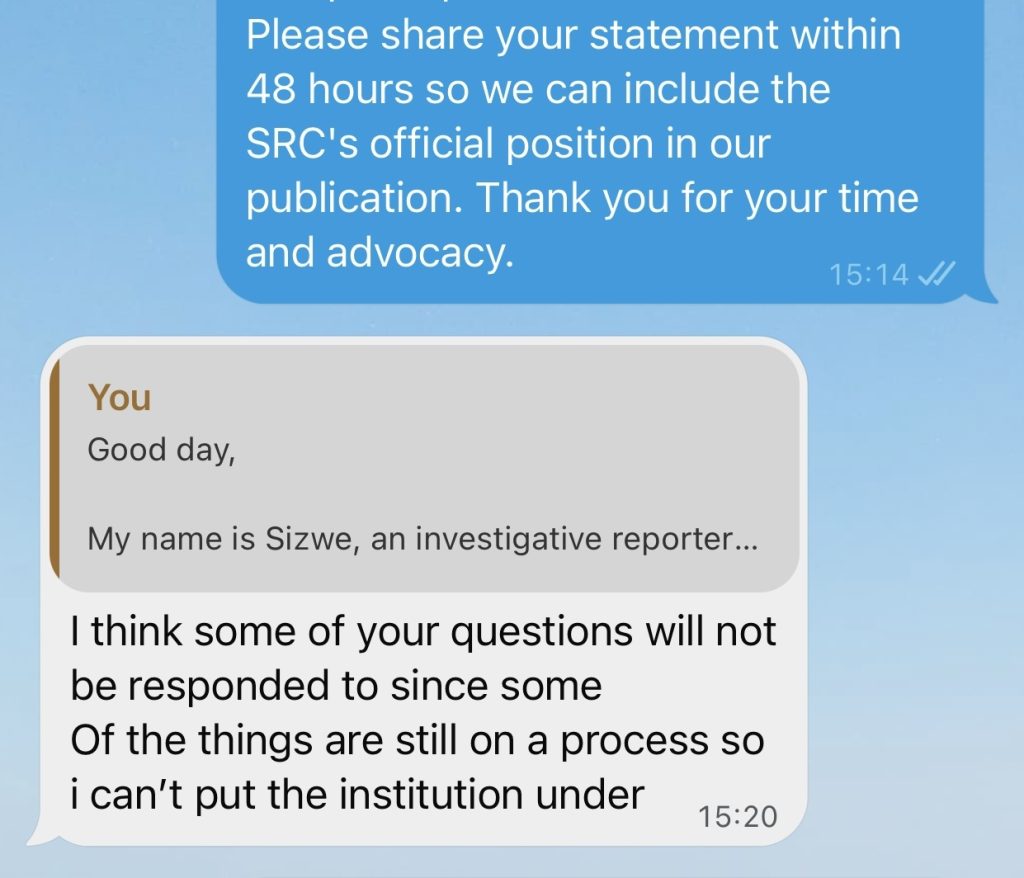
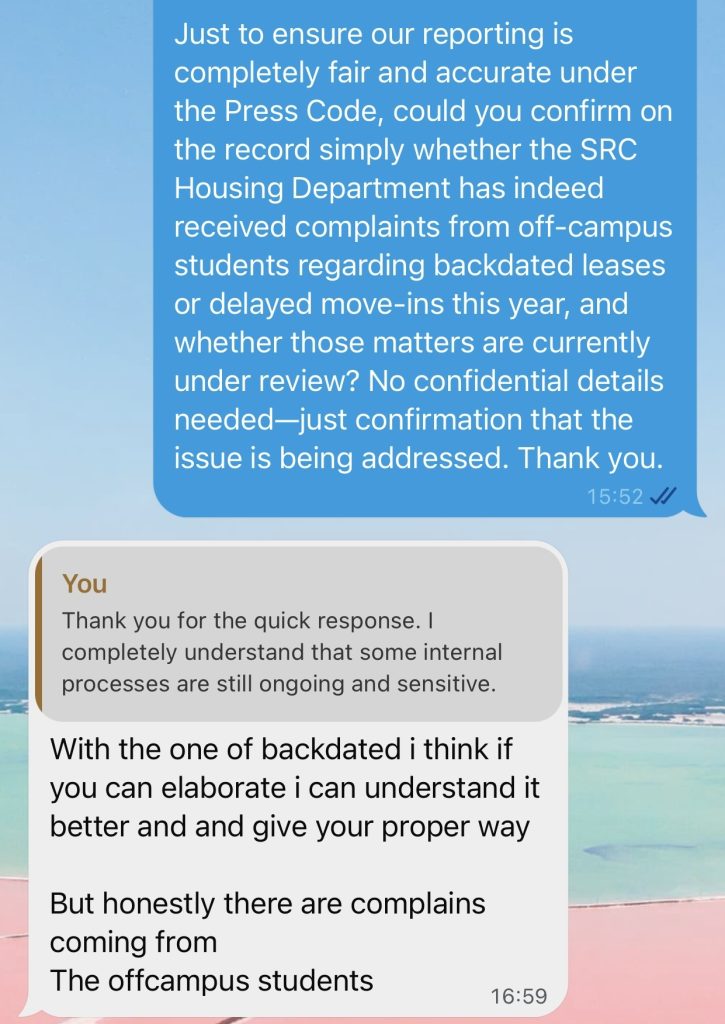
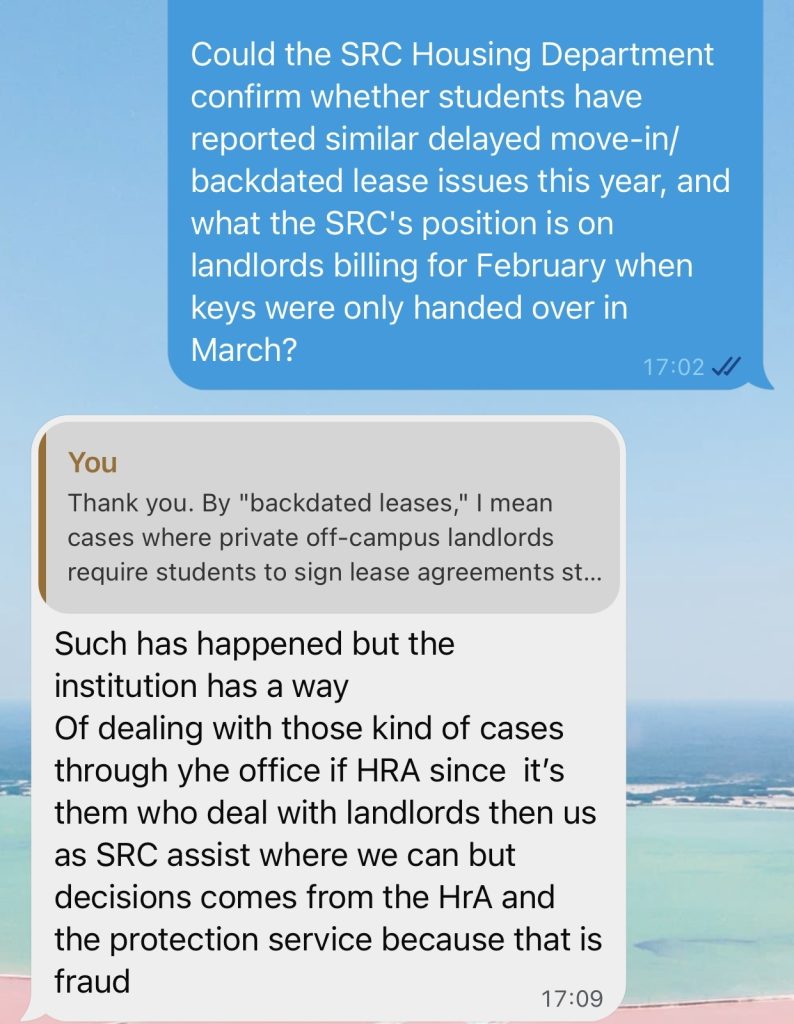
Exhibit D —On-the-record WhatsApp correspondence sequence with the SRC Housing Department (15:20–17:09), moving from initial notes on ongoing internal processes to confirming incoming off-campus student complaints, identifying Housing and Residence Affairs (HRA) and Protection Services jurisdiction, and explicitly classifying backdated February billing during March move-ins as “fraud” (Contact details redacted).
Senior Assistance Officer (Off-Campus Accommodation) Response
Formal written inquiries were also submitted to the university’s Off-Campus Accommodation Administration requesting institutional insight into student complaint volumes, accreditation oversight, and formal dispute resolution mechanisms. Despite follow-up correspondence, no comment or response had been received from the Off-Campus Accommodation Administration prior to publication.
Property Management Response
Formal written queries setting out the date gap between 5 February and 10 March 2026, the retention of February accommodation disbursements, and allegations of coercive key withholding were sent to property management on 2 November 2026. On 10 November 2026, a representative responded via email stating: “I will look into this and get back to you.” Despite more than 132 hours elapsing since that acknowledgement, no substantive response or explanation had been provided as of publication deadline.
Statutory Protections & Legal Framework
Under South African law, charging rental fees without providing physical possession of the property violates statutory protections governing residential tenancies:
- The Rental Housing Act 50 of 1999: Mandates fair dealing between landlords and tenants and empowers provincial Rental Housing Tribunals (RHT) to set aside unfair or illegal lease provisions, halt unfair practices, and order financial restitution. Demanding payment for a residential period where access was withheld constitutes an actionable unfair practice.
- The Consumer Protection Act (CPA): Section 48 prohibits unfair, unreasonable, or unjust contract terms, barring suppliers from charging consumers for services or physical access that were never supplied.
- Reasonable Publication Standards (Bogoshi Principle): In accordance with South African defamation jurisprudence and Sections 1.1 and 1.2 of the SA Press Code, this report relies on verified primary documentation, exact timestamps, and balanced right-of-reply disclosures in the compelling public interest.
Backdating leases to capture phantom occupancy allowances undermines the integrity of student housing support in South Africa. By converting anecdotal student grievances into a documented evidentiary paper trail, this investigation establishes clear grounds for financial audit and Rental Housing Tribunal intervention—ensuring that public and private housing funds pay only for real rooms, not paper promises.

These landlords are scammers!!
Appreciate you reading, La! This is exactly why putting these paper trails on the record matters. If you’ve experienced something similar—or know students still waiting on keys after being billed—drop us a message via the Submit a Tip-Off tab in the menu. The more receipts we gather, the harder it is to ignore.